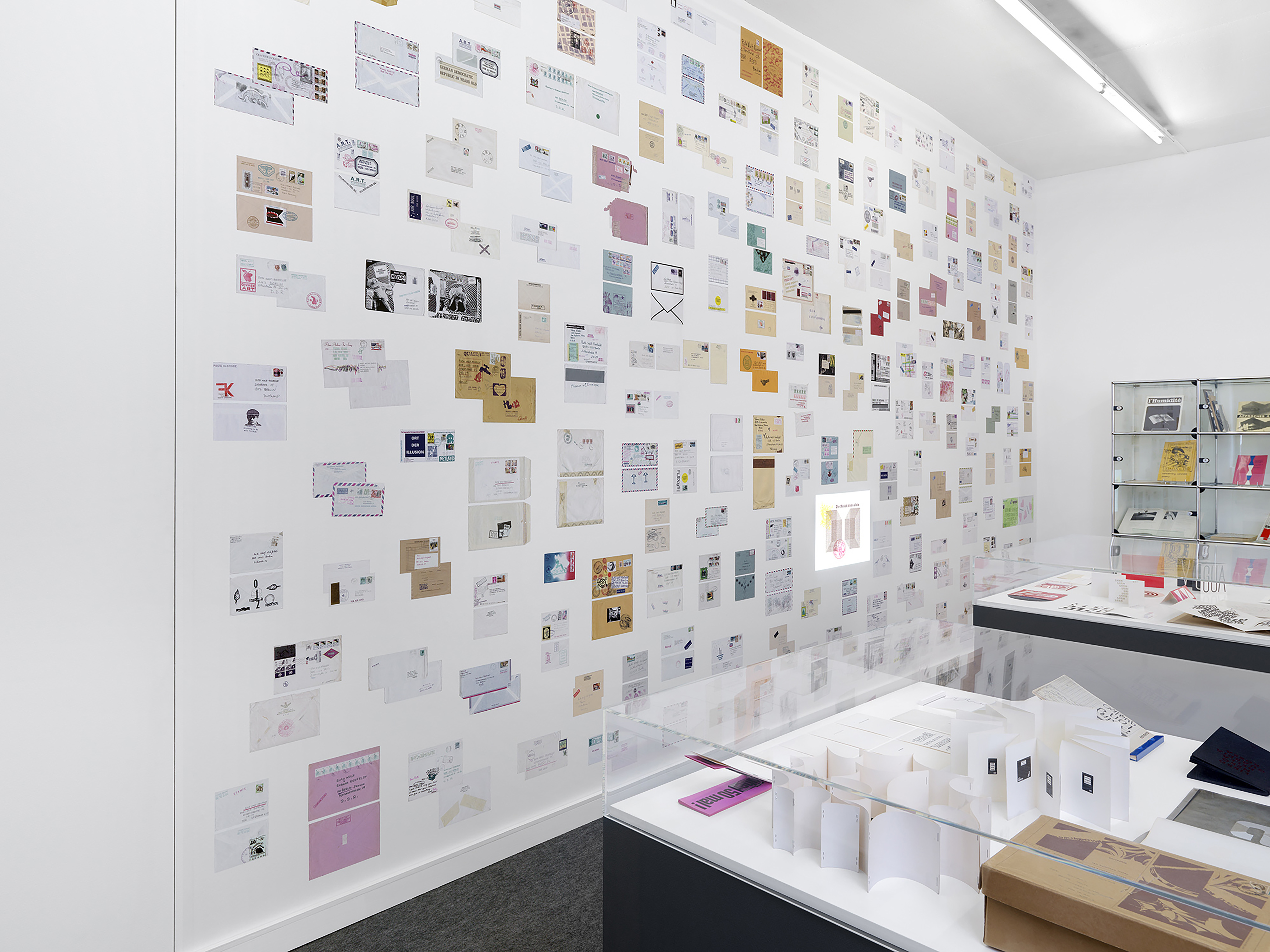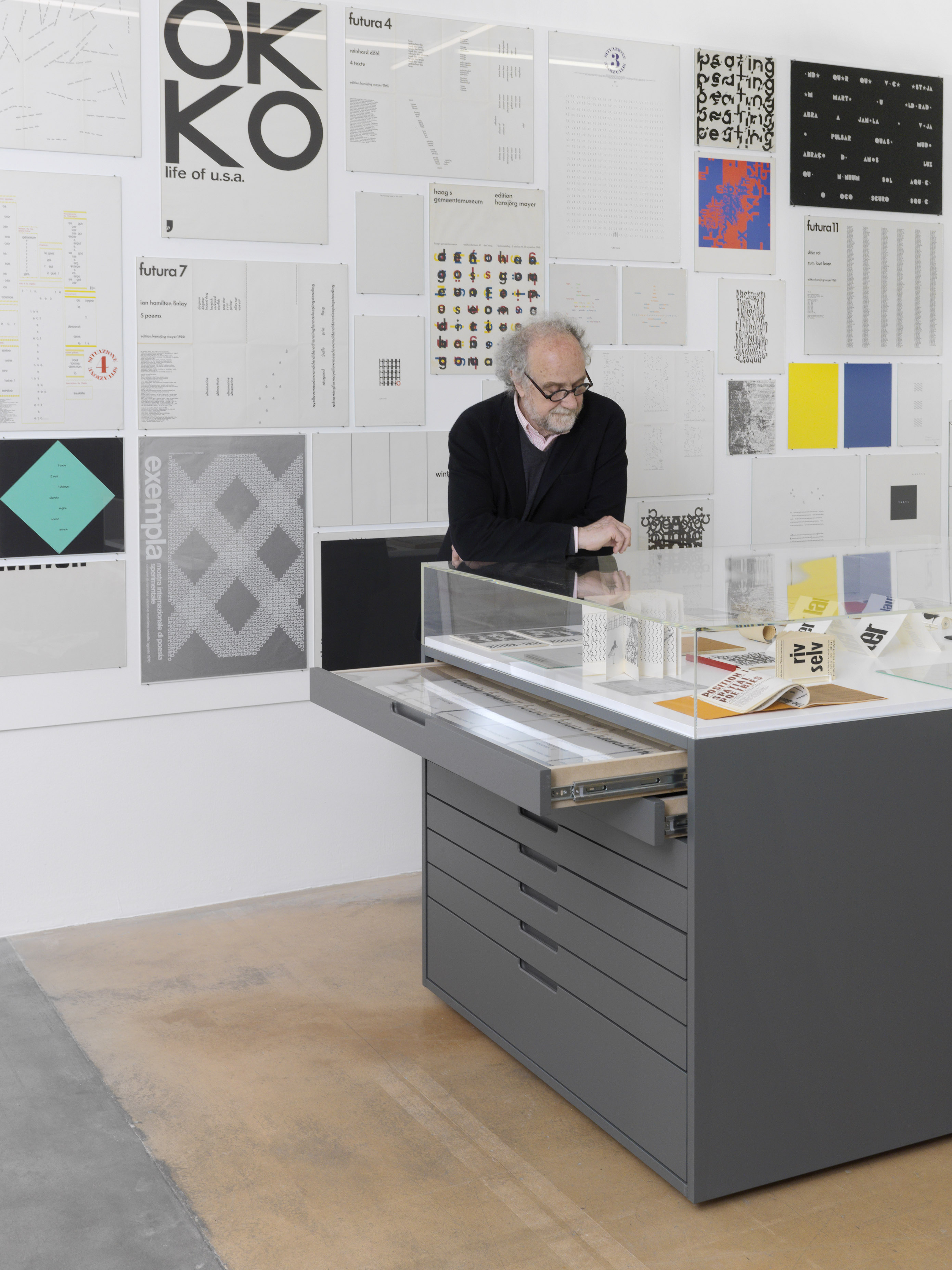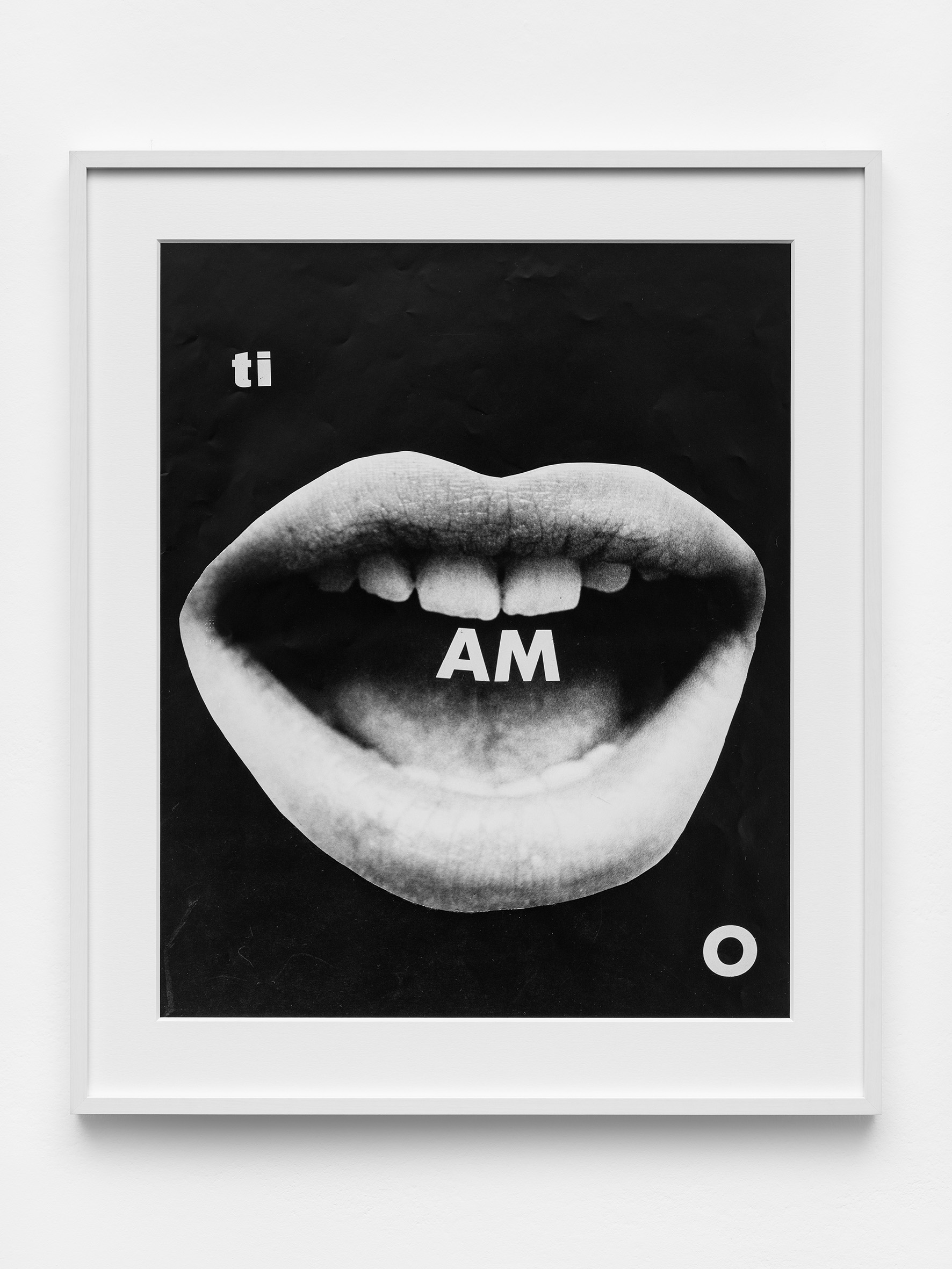
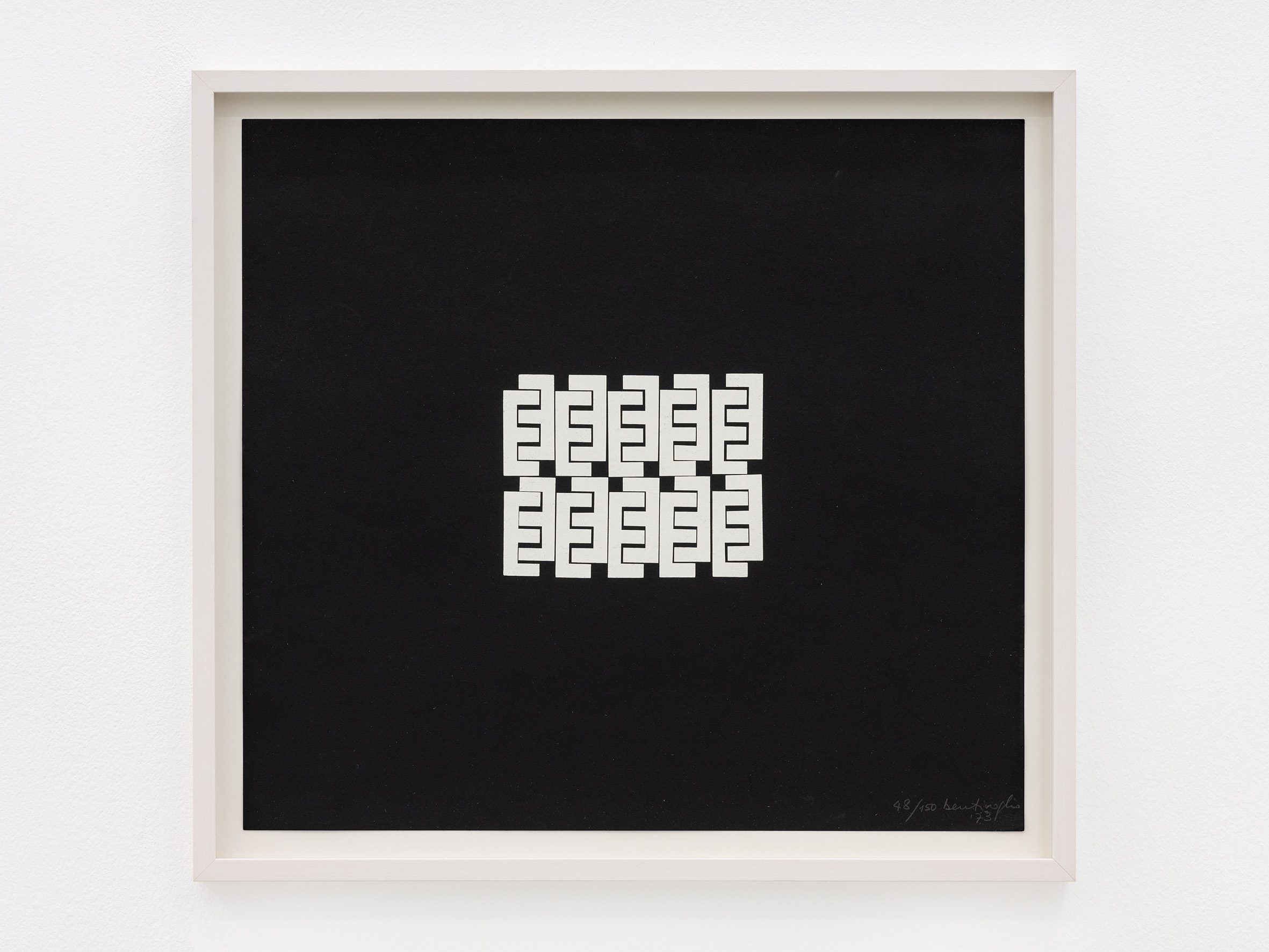
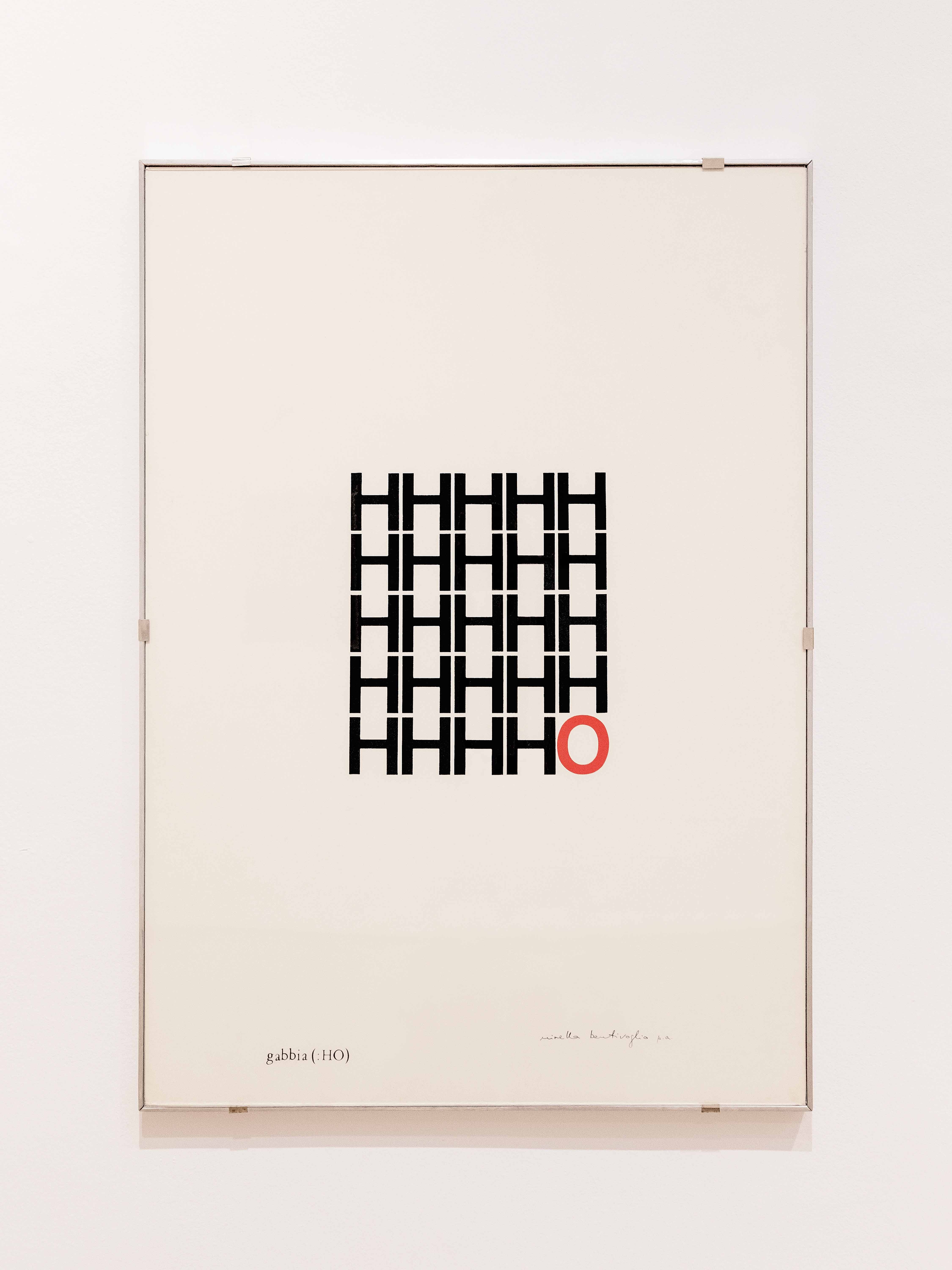
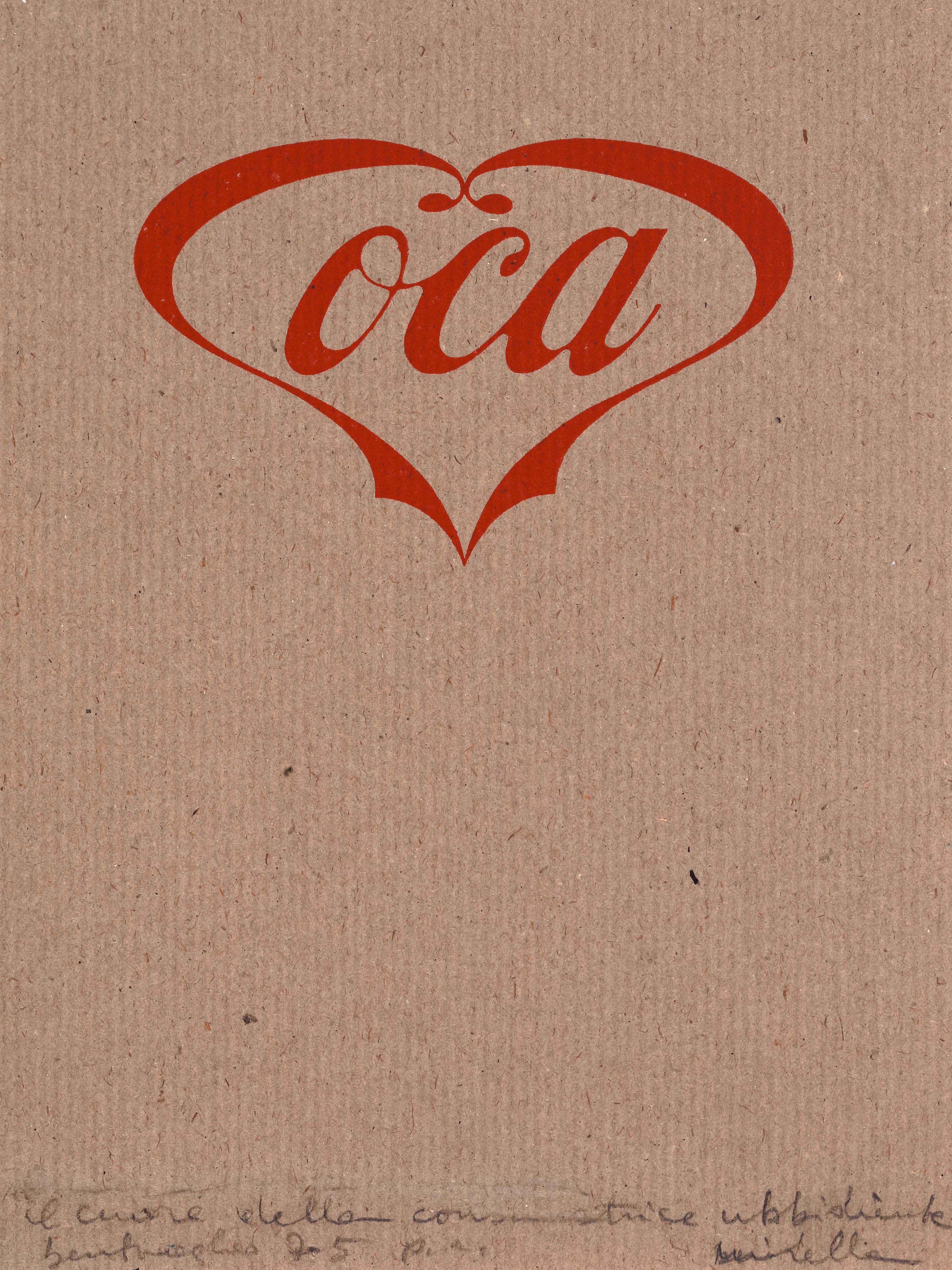
The MAMCO’s Concrete Poetry Cabinet, part of the collection since 2017, forms the starting point for this exhibition organized in collaboration with the Kunsthaus Biel Centre d’art Bienne (KBCB). Centered on the figure of Mirella Bentivoglio (1922–2017), the project highlights the decisive role of this artist, author, collector, and curator in the rise of a critical and communal visual poetry. As early as the 1970s, she was among the first to organize collective exhibitions exclusively featuring women artists, notably Materializzazione del Linguaggio, presented on the sidelines of the 1978 Venice Biennale. A true manifesto for the feminization of language and the reappropriation of its codes, this event was deeply rooted in the highly politicized context of feminist Italy at the time.
Bentivoglio attacks the foundations of patriarchal culture through language itself. Aware that the alphabet and grammar have been shaped by centuries of male domination established as the default norm, she undertakes, alongside her peers, to fragment, reorganize, and reclaim them. Their approach, simultaneously militant, aesthetic, and conceptual, operates through a meticulous dissection of language and a liberation of the word from its fixed meaning. This precise “sabotage” often involves the body, with many artists using their own image to embody the new systems they devise.
The exhibition Mirella Bentivoglio: Sabotages unfolds in two parts. The first section brings together Bentivoglio’s works by theme—self-portrait, play with language, negation, conjunction, symbols—where she reindexes signs with irony: words dissected for their double meanings, poems sculpted into objects, and the letters “E” and “O” isolated for their potential to link, include, or separate. The second part expands the scope to the network of artists supported by Bentivoglio. It explores writing beyond the word through symbolic scripts, the denunciation of “silencing” (Tomaso Binga), the hacking of writing (Maria Lai, Elisabetta Gut), gestural alphabets (Ketty La Rocca), and embodied signs (Ilse Garnier). These practices transform an idiom constrained by gender injustices into a material for (de)construction, paving the way for new beginnings.
- The exhibition is curated by Elisabeth Jobin with the support of Zoé Touzanne